 Before Breakfast
Beet Powder, a Morning Mile, and the Step That Happens on the Tongue
SuperBeets Heart Powder is a black-cherry beet powder, one teaspoon in four to six ounces of water. Before its nitrate goes anywhere, it makes a round trip through your mouth, and this page follows that trip.

This is a paid advertisement. Sponsored by Human Power of N Company (Humann).

The byline up top is a house name, and Walt and Gene, the two walkers you'll meet on this mile, are composites of the men our writers walk with.
Nothing they do here is a result anyone measured, and what this page says about the powder comes from the seller's listing, its label panel, its refund terms and published studies, all read in September 2026.
Most mornings, six of them, I walk the same mile before breakfast.
Out the front door at twenty to seven, down Birch Street, around the water tower and back up the hill.
It isn't a workout, and I don't own anything that beeps.
It's a habit, like the pot of coffee that's waiting for me when I get back.
There are three of us on most days.
Walt used to carry mail and still walks like he has a route to finish, and Gene talks the whole way and never runs out of things to say.

You probably have your own version of this.
A loop around the block, a lap of the mall before the stores open, a dog who knows the route better than you do.
And you probably know the small thing I'm about to describe.
Some mornings the hill on Birch Street feels like a hill, and some mornings it feels like two.
Nothing is wrong on those mornings.
It's the same hill, the same shoes and the same man, and the legs simply have an opinion.
The hill doesn't change. The mornings do.
Last spring Walt started showing up with a faint red line on his upper lip.
He'd been stirring a spoonful of red powder into a glass of water on his porch before we set out.
"Beets," he said, when Gene finally asked.
"My daughter sent it. She read something about walkers."
Then he looked at me, because I'm the one in the group who reads labels at the grocery store.
"You'll know what's in it," he said, and the next morning he handed me the tub.
So I did what I always do with a question like that.
I took the tub home, read every line on it, and went looking for the studies behind the idea.
The story of beet nitrate starts in a place most talk about beet powder skips. It starts in your mouth, at the back of your tongue, long before anything reaches your legs.
This page follows that nitrate the whole way, one stop at a time.
It isn't a verdict, and it isn't medical advice.
By the end, you'll know what the teaspoon holds, what it doesn't print, and what the studies measured in people our age.
You'll also know the parts of the morning mile that cost nothing at all.
A Mile Before Breakfast, Six Days a Week
I started walking in the mornings the year I retired from the parts counter.
My wife said I needed somewhere to be at seven that wasn't her kitchen.
She was right, as usual.
Twelve years later, the mile is the part of the day I'd give up last.

The route never changes much.
Down the porch steps, left at the mailbox, past the church with the red doors, and down to the water tower where the town ends and the fields begin.
The way back is the part everybody talks about.
Birch Street climbs for about three blocks, not steep, just long enough that the conversation stops for a minute.
What does a walk ask of the body? Mostly, it asks for oxygen.
Every step uses muscle, and working muscle needs a steady supply of blood carrying oxygen to it.
To carry more, the blood vessels in your legs widen when you start moving.
That's the ordinary plumbing of a morning walk, and you never have to think about it.
One of the small molecules involved in that widening is called nitric oxide.
Your body makes it on its own, all day long, whether you walk or not.
Where does the body get it? The seller's own page describes two routes, and the second one is the reason beet powder exists.
The first runs through the lining of your blood vessels. The second starts with the food on your plate.
That second route runs on something called nitrate.
It's the same chemistry as the word on a fertilizer bag, but here it means the nitrate that vegetables pull up from the soil as they grow.
Bacteria in your mouth and gut turn part of that nitrate into nitrite. [1]
From there, nitrite can become nitric oxide, and that's the whole idea behind drinking beets.
Beet powder is sold for exactly that.
It's a way of drinking vegetable nitrate from a glass instead of eating it from a plate.
The idea behind the tub is simple. Vegetable nitrate, in a glass, once a day.
Simple ideas deserve a close look, though.
Between the glass and the walk there's a step I had never heard of, and it happens before you've even laced your shoes.
To see it, we first need to know where nitrate comes from in an ordinary week of eating.
So let's start at the kitchen table, where all of this begins anyway.
Where the Nitrate in Your Diet Comes From
Before we get to the mouth, let's get the plate straight.
About 80 percent of the nitrate you eat comes from vegetables. [1]
Not all vegetables carry the same amount, and the differences are large.
A 2013 review ranked common vegetables by their average nitrate, and the order surprised me. [2]
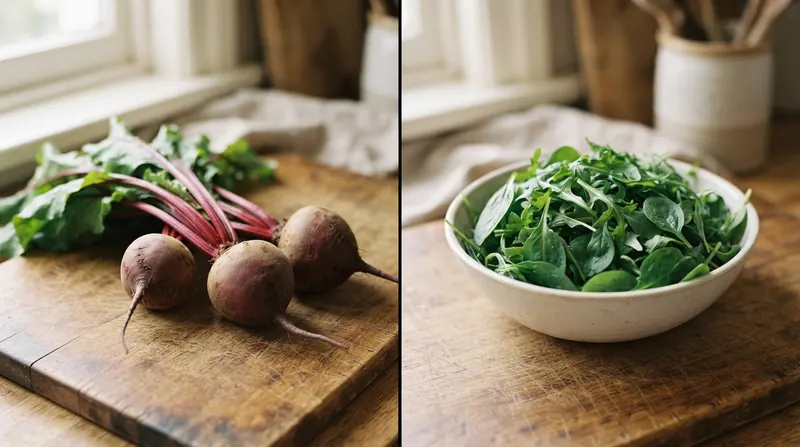
Here's the list, in milligrams of nitrate per kilogram of vegetable, from the top down. [2]
- Rocket, the salad green some people call arugula: about 2,597.
- Spinach: about 2,137.
- Lettuce: about 1,893.
- Radish: about 1,868.
- Beetroot: about 1,459.
- Carrot about 222, onion about 87 and tomato about 69.
So beet isn't the champion? Not by weight.
The leafy greens beat it, and a plain salad of rocket and spinach carries more nitrate per ounce than the beet does.
Beet's advantage is that it juices and dries well.
A deep red root turns into a deep red powder that keeps in a cupboard, and nobody has figured out how to do that with a salad.
How much is in an ordinary serving? The same review worked it out for beet.
An 80-gram portion, a little under three ounces, came to roughly 117 milligrams of nitrate. [2]
That number matters later, so keep it in your pocket.
When we get to the teaspoon, it's the yardstick we'll hold up next to it.
The ranges are wide, too.
The review's beetroot figure ran from 644 to 1,800 milligrams per kilogram, depending on how the beet was grown and stored. [2]
And a whole day can swing even more than a single beet.
In a 2009 analysis, two day-long menus built on the same vegetable-rich eating plan delivered anywhere from 174 to 1,222 milligrams of nitrate, depending only on which vegetables and fruits were chosen. [3]
Same kind of plate, seven times the nitrate. It all depends on which greens land on it.
One more thing about the plate, and it's the one that sets up everything else.
In a trial of 30 healthy men and women, a single meal with nitrate-rich spinach raised nitrite and other markers of nitric oxide in the blood. [4]
It was followed by a greater widening of the arm artery on an ultrasound than a comparison meal. [4]
Apples rich in flavonoids did about the same, and eating both together added nothing. [4]
That's a short-term measurement after one meal, not a health outcome.
But it's the nitrate route, measured from an ordinary plate of spinach, and it's a good place to start.

Why the Salad Isn't Always on the Table
If leafy greens carry the most nitrate, you might ask why anyone buys a tub at all.
It's a fair question, and I asked it too.
Why not just eat the salad? Because most of us don't, not every day.
I can tell you how many salads I ate last week, and it's a number you could count on one hand with fingers left over.
Rocket wilts in the crisper by Thursday.
Spinach turns to slime in the bag if you look away, and cooked beets stain everything they touch, including the cutting board, the dish towel and your good shirt.
And the amounts swing so much from plate to plate that a vegetable-rich week can deliver very different nitrate from one day to the next. [3]
That's not a failing, it's just how food works.
So what's the appeal of the tub? Sameness.
The same teaspoon, the same glass, the same minute on the porch, every morning, whether the crisper is full or empty.
That's the honest pitch, and I think it's the one that got Walt.
He's never been a salad man, and he doesn't intend to start at sixty-nine.
The tub doesn't beat the salad. It shows up on the mornings the salad doesn't.
Does that make it better than vegetables? No, and nothing on this page says so.
A plate of greens comes with fiber and potassium that no teaspoon copies, and we'll come back to the plate at the end.
But a daily habit you actually keep is worth something.
So the real question isn't beet against salad, it's what happens to the nitrate in that glass after it goes down.
The First Stop Is Your Mouth
Here's the step Walt had never heard of, and neither had I.
When you eat or drink nitrate, it doesn't simply travel to your legs and get to work.
What happens first? The nitrate is readily absorbed from your gut into your blood, like most of what you swallow. [5]
Then something happens that I didn't expect: a good share of it comes back up.
A 2013 review puts it plainly: about 20 to 28 percent of a nitrate load is secreted into your saliva. [5]
Your salivary glands pull it back out of the blood and send it to your mouth.
That's where the tongue comes in.
Bacteria that live on the back third of your tongue turn that nitrate into nitrite. [5]

Then you swallow, the way you do all day without noticing.
The nitrite goes back down with your saliva, and from there, some of it can become nitric oxide in the body.
How do we know the mouth matters? Because researchers tried taking it out of the loop.
In one early study, people swallowed a dose of nitrate and then avoided swallowing their saliva for a while. [6]
Nitrate rose sharply in their saliva, blood and urine, just as you'd expect.
But when they kept from swallowing their saliva, the roughly fourfold rise of nitrite in their blood didn't happen. [6]
The review describes the same thing with beet juice.
Volunteers asked to spit out all their saliva for three hours after drinking it had no rise at all in the nitrite in their blood. [5]
No saliva, no nitrite: the mouth isn't a hallway, it's a workshop.
I read that twice at my kitchen table.
Then I thought about every glass of red powder Walt had drunk on his porch, and every bottle of mouthwash on every bathroom shelf in the country.
How long does the round trip take? Longer than you'd guess.
The review puts the peak of nitrite in the blood at about three hours after nitrate is eaten. [5]
In a study of juice doses in young men, blood nitrite peaked about two to three hours after drinking. [7]
So the trip through your mouth isn't a quick one, and it isn't finished by the time you've tied your shoes.
That timing shaped how the studies were run, and we'll come back to it.
For now, hold on to the picture: glass, stomach, blood, saliva, tongue, swallow, blood again.
Seven stops, and the one that makes the nitrite is the back of your tongue.
Is this a new idea? Not to the people who study it.
It's been laid out in scientific reviews for more than a decade, and the seller's own page mentions the bacteria in your mouth too.
Do you have to do anything special to keep the round trip going? Mostly, you just have to swallow, which you'd do anyway.
The one thing on your bathroom shelf that the studies looked at is the subject of the next section.
It's worth a minute of your time, because nobody I walk with had heard of it.
And it's the one part of this whole story that you can actually do something about.
The Bathroom Shelf and the Back of the Tongue
Most of us grew up believing a mouth should be as clean as a whistle.
Brush, floss, rinse, and don't let a single germ survive the morning.
What happens to the tongue's bacteria when you rinse? Two small studies went looking.
In the first, seven healthy volunteers rinsed with an antibacterial mouthwash before taking a dose of nitrate. [8]
The nitrate still built up in their saliva and blood, the same as without the rinse.
But the rinse abolished its conversion to nitrite in the saliva and markedly blunted the rise of nitrite in the blood. [8]
The authors concluded that the rise depends on nitrate-reducing bacteria that normally live in the mouth. [8]
Seven people is a small study, and it used a plain dose of nitrate, not beets.

The second study was larger and used real beet juice.
Twelve healthy men, average age 36, drank 140 milliliters of beet juice, about 520 milligrams of nitrate, and then gargled every hour for four hours. [9]
Some gargled water, some a milder antiseptic rinse, and some stronger antibacterial rinses.
Nitrate rose in saliva and blood with every rinse, but there was less nitrite with the stronger antibacterial rinses than with water or the milder one. [9]
The authors describe a stepwise effect: the stronger the rinse, the less nitrite. [9]
Twelve men is still small, and nobody rinses every hour for four hours on an ordinary morning.
The stronger the rinse, the less nitrite. That's the finding, and it's worth knowing.
When I told my wife about this over coffee, she asked the obvious question.
It's the same one you're probably asking now.
So should you stop rinsing? That's not my call, and it isn't this page's.
If your dentist asked you to use a particular rinse, keep using it.
What I'd do is ask the question out loud at your next cleaning.
Tell your dentist or hygienist you drink beet powder for its nitrate, and ask whether your rinse and your teaspoon get along.

Walt's answer, when I told him on the walk, was practical.
He'd been rinsing with the strong blue stuff right before his glass of red, every single morning.
Nobody measured Walt's nitrite, and nobody is going to.
But his morning ran in the same order as the rinse studies: rinse first, nitrate after.
If the rinse and the teaspoon share the same five minutes, the rinse gets to the tongue first.
Does the order matter over a whole day? The studies don't say.
They followed a single dose for hours, not a habit for weeks.
What about brushing, or flossing? Neither study tested them, so I can't tell you anything.
I'd rather say I don't know than hand you a rule nobody measured.
So I'll leave you with the facts and the question for your dentist.
That's more than the tub says, and it's where the mouth part of the mile ends.
Now it's time to look at the tub itself.
Because once you know where the nitrate is headed, the next question is how much of it the teaspoon actually sends.
Walt's Tub, From the Scoop to the Small Print
Walt's tub sat on my kitchen table for a week, and I read every line of it more than once.
Here it is, the way I'd describe it to you at the grocery store.
That's the whole tub on one card.
Now let's go through it line by line, the way I would in the aisle.
What does the label say to do? One scoop a day, mixed into 4 to 6 ounces of water.
The seller adds two directions I liked: drink it right after mixing, and don't mix it with juice or a smoothie.
What time of day? The seller's own answer is that any time of day works.
It also says not to take more than two servings a day, and that's a cap I'd respect.
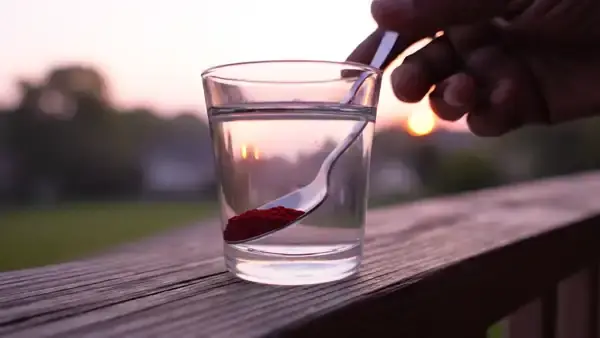
What's actually in it? Six things, in this order on the ingredient line.
Beet root powder, fermented beet root powder, black cherry flavor, malic acid, magnesium ascorbate, and a stevia extract called rebaudioside A.
The two beet powders are the point of the tub.
The label doesn't say how much of each, but together they make up most of the five-gram teaspoon.
Why fermented beet? The label doesn't explain it, and I won't guess.
I'd rather tell you I don't know than invent a reason that sounds good.
Malic acid is the sour note you taste in a green apple.
It's there for flavor, along with the black cherry, and the stevia is there to round off the tartness.
What does the magnesium ascorbate do? It's one compound that supplies two things at once, vitamin C and magnesium.
The panel prints 50 milligrams of vitamin C, 56 percent of the Daily Value, and 18 milligrams of magnesium, 4 percent.
Vitamin C is a vitamin your body doesn't store much of, so it has to come in with your food every day.
Half the Daily Value in a teaspoon is a tidy amount, though the tub isn't sold for it.
The rest of the panel reads like a food label, because it is one.
Fifteen calories, 65 milligrams of sodium, 4 grams of carbohydrate, 3 grams of sugars with none added, 1 gram of protein and 160 milligrams of potassium.
Wait, a food label? Yes, and that's the first oddity.
The front of the tub says "Dietary Supplement," but the official panel is headed "Nutrition Facts," which is the layout used for foods.
The second oddity is the calories.
The image of the panel says 15 per teaspoon, and the text of the online listing says 40.
Neither number will change your morning.
But when a tub disagrees with its own listing, I write it down, and I'd trust the printed panel over the web page.
Where does it come from? It's made by the Human Power of N Company, which goes by Humann, in Austin, Texas.
The label says it's made in the USA with globally sourced ingredients, and it's also sold in stores and online elsewhere.
Is it one of those powders with a long list of fillers? No.
Six ingredients is a short list, and every one of them is on the panel where you can see it.
One teaspoon, half a glass, straight down. That's the whole ritual.
So far, so good.
But there's one line I went looking for on that panel before any of the others, and it isn't there.
How Much Nitrate Is in a Teaspoon?
Here's the line I looked for first and didn't find.
The label does not print how much nitrate is in a teaspoon.
That's worth sitting with for a moment.
The whole reason to drink beet powder is its nitrate, and the one number that tells you how much you're getting isn't on the tub.
The listing talks about nitrate, and about "a unique ratio of dietary nitrates and nitrites."
The panel counts vitamin C to the milligram and magnesium to the milligram, and leaves nitrate out.
Why does the amount matter so much? Because every study in this story counted its nitrate carefully, and the results changed with the amount.
Here's the clearest example I found.
Ten healthy young men drank 70, 140 or 280 milliliters of concentrated beet juice, about 260, 520 or 1,040 milligrams of nitrate. [7]
The nitrite in their blood rose in step with the dose, peaking two to three hours later. [7]
The smallest dose, 70 milliliters, did not change how they handled cycling. [7]
The largest made moderate cycling take 3 percent less oxygen, and the middle dose 1.7 percent, too small to count. [7]
Both of the bigger doses let them keep going longer in hard cycling, by 14 and 12 percent. [7]
And the biggest dose added nothing over the middle one. [7]
In that study, 260 milligrams didn't change the cycling. 520 did, and 1,040 did no better.
Now line up the other amounts from the studies on this page, next to your teaspoon.
- An 80-gram portion of beet, a little under three ounces: about 117 milligrams. [2]
- The walking study in young men: about 385 milligrams a day, for six days. [10]
- The beet juice and rinse study: about 520 milligrams. [9]
- The study in men averaging 69: 800 milligrams, in a single dose. [11]
- Your teaspoon: not printed.
So where does a teaspoon fall on that list? I honestly can't tell you.
Neither can the tub, and that's the gap in this whole story.
Can you find out? You can ask.
The seller publishes a customer line, (855) 636-4040, and an email address, info@humann.com, and nitrate per teaspoon is a fair question.
If they tell you, you'll have the one number this page couldn't give you.
If they don't, that's an answer too, and you can weigh it along with the price.
Can a teaspoon match a glass of juice? Only a printed nitrate figure could say.
The walking study used half a liter of beet juice a day, and the rinse study 140 milliliters of it. [10] [9]
Drying can close part of that gap, since beet powder is beet with the water taken out.
But without a printed figure, "part of the gap" is as far as anyone can honestly go.
The studies counted every milligram. The tub counts everything but the nitrate.
None of that means the teaspoon is empty.
It means the most important line of this particular panel is a blank, and you're entitled to ask the seller to fill it in.
What the Walking Studies Measured
Now to the legs, which is where Walt thought the whole thing started.
Most of the research on beet nitrate was done in young, fit people on bicycles and treadmills, and I want to be upfront about that.
What did the walking study find? Nine healthy, active young men drank half a liter of beet juice a day for six days, about 385 milligrams of nitrate. [10]
Walking on a treadmill then took less oxygen: 0.70 liters a minute, against 0.87 with the same juice with its nitrate removed. [10]
The juice with its nitrate taken out did nothing, so the authors put the effect down to the nitrate itself. [10]
In hard running, the men also lasted 15 percent longer before exhaustion. [10]
Why does less oxygen matter? Think of it as the price of a step.
If the same walk costs less oxygen, the legs are doing the same work on a smaller bill.

Two more studies in young men point the same way.
In eight men aged 19 to 38, six days of beet juice roughly doubled the nitrite in their blood and made moderate cycling cost less oxygen. [12]
Their time in hard cycling stretched from about 583 to 675 seconds. [12]
That's a minute and a half more on the bike, in men half our age.
In nine well-trained young athletes, three days of nitrate took the oxygen they used in moderate cycling from 2.98 down to 2.82 liters a minute. [13]
The authors said a vegetable-rich diet can supply that amount of nitrate. [13]
So in the young, the finding repeats: with enough nitrate, the same effort costs a little less oxygen. [10] [12]
That's the part of the story that holds up best.
And in people our age? Here's where the story gets honest, and mixed.
A 2017 review gathered 12 randomized trials of food nitrate, mostly beet juice, in older adults. [14]
Four of the 12 reported that people lasted longer during exercise. [14]
Measures of blood flow and the circulation improved in six studies, and did not improve in the other six. [14]
The reviewers reached the conclusion you'd expect from careful people: more double-blind trials are needed. [14]
Six up and six not is close to a coin toss, and I won't dress it up as anything else.

Then there are the single trials, and they're worth reading one at a time.
In a double-blind trial of healthy adults aged 60 to 75, a week of beet juice raised nitrate in the blood and urine, as it should. [15]
But it did not change oxygen use at rest or during an exercise test, grip strength, the timed up-and-go or chair rises. [15]
It didn't change walking speed over 10 meters or everyday activity on a movement sensor either, so the gains seen in young people weren't repeated. [15]
In 10 untrained older adults, a single nitrate drink of about 250 milligrams raised nitrate and nitrite in the blood. [16]
It did not increase blood flow or the widening of the leg artery during a knee exercise two hours later. [16]
Is there anything on the plus side for older people? Two studies, both small and both specific.
In 15 healthy men averaging 69, a single 800-milligram dose of beet juice raised the nitrite in their blood 8.6-fold. [11]
Two and a half hours later, the thigh artery widened more easily when blood flow rose: 1.18 percentage points, against 0.23 with a juice stripped of its nitrate. [11]
Blood flow during passive leg movement didn't change. [11]
And in 11 older adults averaging 69 and 11 young adults, a week of nitrate-rich beet juice raised nitrate and nitrite in the blood more than sevenfold. [17]
Only the older group held a sustained calf contraction about 32 seconds longer before exhaustion, and neither group got stronger. [17]

So what do I make of the studies in older adults? A handful of small signals and a handful of flat results.
The calf held on longer in a lab, and one artery widened more easily in one test. [17] [11]
But a week of juice didn't change walking speed or everyday activity in people aged 60 to 75. [15]
And in the review, the blood-flow results split down the middle. [14]
In the young, the oxygen finding repeats. In people our age, the results split down the middle.
That's not a reason to write off beet nitrate, and it isn't a reason to expect much from a teaspoon either.
It's a reason to be patient with your own mornings, and honest with yourself about what you notice.
And remember what those studies used.
Juice, by the glass, with a known amount of nitrate, measured in a lab a couple of hours later. [7] [11]
Did any of them test a powder like this one? Not the studies on this page.
They tested juice, a drink of nitrate or a meal of spinach, and never this tub.
When I told Walt all this on the bench by the water tower, he thought about it for a good hundred yards.
Then he said he'd keep the glass anyway, because he liked the ritual, and asked me what else I'd found.
A Morning With the Teaspoon, Start to Finish
If you decide to try the tub, here's what an ordinary morning looks like, by the label and by the studies.
None of it is complicated, and none of it takes longer than the coffee.
Step one: the glass. Four to six ounces of plain water, about half an ordinary kitchen glass.
Not juice, not a smoothie and not your coffee, because the label asks for water.
Step two: the teaspoon. One level scoop, stirred until the water is an even deep red.
Drink it right away, the way the label asks.
Step three: the swallow. This is the part I'd never thought about before this spring.
You swallow your saliva all day anyway, and that's the round trip that brings the nitrite back down. [6]
Step four: the rinse question. If you use a strong antibacterial mouthwash, two small studies found it blunted the tongue's step. [8] [9]
That's a conversation for your dentist, not a rule from me.
Step five: the walk. Whenever you like.
The seller says any time of day works, and in the studies the lab tests came about two and a half hours after the juice. [11]

What should you expect to notice? Honestly, maybe nothing you could put a number on.
In young men, the finding was a smaller oxygen bill on a treadmill, and in people our age the results split. [10] [14]
If you want a fair test of your own, keep a small notebook by the door.
Write one line after each walk: the time, the hill, how the legs felt, and whether you drank the glass.
After a month, read it back.
That's thirty lines, one tub, and the only study anyone will ever run on your particular mornings.
Will it do anything strange? One thing, and it startles people.
Beet can turn urine pink or red, and that's said to happen in about 10 to 14 percent of people. [18]
In one study of 100 people given beetroot extract, four had visibly red urine. [18]
It comes from the beet's red pigments, and whether you see it seems to depend largely on your stomach. [18]
Anything else worth knowing? Beet is one of the vegetables higher in oxalate, along with spinach and rhubarb. [19]
The same review says the occasional high-oxalate food, as part of a nutritious diet, poses no particular problem. [19]
Should you ask anyone first? Yes, one person.
Beet powder is sold for its nitrate, which the body turns into a widener of blood vessels, so if you take anything daily, show this label to your pharmacist before the first glass.

That's the whole routine.
A glass, a teaspoon, a swallow, a question for the dentist, a line in the notebook and the same hill as always.
Who Might Like It, and Who Can Skip It
Not everyone needs a red glass on the porch.
Here's how I'd sort it out, going by the label, the studies and the price.
You might like it if:
- You already walk most mornings and like the idea of a small ritual before you go.
- You don't eat many leafy greens and want a vegetable-nitrate habit you'll actually keep.
- You like a tart black-cherry drink with no added sugar.
- You're patient enough to keep a notebook for a month and judge by your own mornings.
You can probably skip it if:
- You already eat a big salad of rocket, spinach or lettuce most days, which carries plenty of nitrate on its own.
- You want a printed nitrate figure before you spend money, because this tub doesn't have one.
- You're expecting the results of studies done in young men on bicycles.
- You'd rather put forty dollars a month toward a good pair of walking shoes.
And one group should ask first: anyone who takes anything daily.
Show the tub to your pharmacist, and let that conversation come before the first teaspoon.
What about Gene? Gene eats a spinach salad at lunch most days and walks the whole mile talking.
He decided he didn't need a tub, and by this page's own list, he's probably right.
Three Honest Objections
Every tub has its "yes, but," and this one has three.
Here they are, with the answers I found.
Objection one: the price. When I checked, a single tub listed at $39.95 for 30 teaspoons, about $1.33 a morning.
The seller's monthly subscription listed at $35.96, and the page also showed offers for buying several tubs at once.
Is $1.33 a morning a lot? It depends on what you compare it with.
It's less than a coffee-shop coffee, and more than a bag of spinach, which is one of the highest-nitrate vegetables there is. [2]
Shipping was at no charge on orders from $49.99, with standard delivery of three to ten business days to the 48 contiguous states.
The price and any promotion are set by the seller, so check them on the day you order.
Objection two: the taste and the tub. It's a beet drink with black cherry and a stevia extract, so it's sweet, tart and a little earthy.
The most common complaint about stevia extracts is a slight licorice-like aftertaste, so you'll know on the first glass whether it's for you.
One reviewer quoted further down likes the powder and dislikes the scoop and the container, which, the review says, spill and stain a granite countertop.
If you have light counters, mix it over the sink.
Objection three: the time. The studies ran for a single dose, a week or six days. [10] [15]
A month of mornings is a fair trial of the habit, and the seller's refund window runs well past that.
So what about the refund? The seller's terms offer a refund, less shipping and handling, within 90 days of the purchase date, if you're not fully satisfied.
It covers purchases from the seller's website or its authorized sellers in the United States, for the original buyer.
You'll need a return authorization number first, by phone or email, and the return has to go out within 30 days of getting that number.
The terms say returns without that number can be charged a 20 percent restocking fee, so make the call before you pack the box.
Ninety days, a phone call first, and shipping on you. That's the whole fine print.
What the Buyers Wrote
I read the reviews last, after the panel and the studies.
Reviews are what other people write down after the glass is empty.
How many reviews are there? The seller's page showed 3,349 ratings, averaging 4.2 stars, when I read it.
Of those, 2,137 were five stars, 461 four, 336 three, 166 two and 249 one.
That's a real spread, with a real number of unhappy customers.
I trust a page more when it shows me the one-star count, and this one does.
Were the reviewers confirmed buyers? The seller's review system doesn't mark confirmed purchases.
So I don't mark them as confirmed here either.
Here are five of them, word for word, trimmed only where you see an ellipsis.
They're opinions, not evidence, and the small pictures beside them are illustrations, not the reviewers.

Great tasting, use daily in my water, love it! Using it for several years, will never stop!

The additional energy that I feel with this product is very welcomed. I have been taking it for about 8 years now.

I love this product, Hate your prices and packaging. I've used this for years and compared to competitors who are over 40% Less Expensive and have better flavor. … The scoop and the container it's in causes constant spilling that, if it gets a single drop of moisture, stains my granite countertops.

We love it. My husband adds it to our protein shake every day.

My returning order seemed to have been lost in shipping. After contacting Customer Service another order was sent and received. Great service! I am enjoying the product once again.
What do I take from them? Irisheyes and the reviewer from Georgetown have kept the habit for years, and that tells you people stay with it.
The one I'd read twice is R Ray's: a longtime buyer who likes the product and says plainly that the price and the packaging are a problem.
Denny's husband stirs it into a protein shake, which is his business, but the label asks for plain water.
And JeteyeNC's note is about a lost package and a replacement that arrived, which is worth knowing about a seller before you order.
None of them can tell you what the teaspoon will do for your mornings.
But they tell you who buys it, how long they stay, and what bothers them, in their own words.
The Parts of the Mile That Cost Nothing
Before I close the notebook, here's the page I always add at the end.
It's the list of things that belong on a morning walk and don't come in a tub.
The minutes. The federal activity guidelines set a weekly range of 150 to 300 minutes of moderate activity, such as brisk walking, plus muscle-strengthening on two or more days. [20]
Some activity is better than none, and bouts of any length count toward the week. [21]
The steps. Ten thousand a day is popular advice, not a guideline. [21]
The guidelines' own example is adding a 20-minute walk, about 2,000 steps, to a usual day. [21]
The pace. Brisk is when you can talk but not sing. [22]
In healthy adults aged 61 to 85, about 100 steps a minute marked the start of moderate intensity. [23]
The balance. After 60, the guidelines add balance training, with the effort set by your own fitness and not someone else's. [24]
A minute standing on one foot while the coffee brews counts, and it asks nothing of your wallet.
The plate. Three servings of vegetables and two of fruit a day, eaten whole, on a 2,000-calorie pattern. [25]
Leafy greens carry more nitrate than beet by weight, and the salad bowl never needs a scoop. [2]
The salt line. Americans eat about 3,400 milligrams of sodium a day against a limit of less than 2,300, and over 70 percent of it comes from packaged and prepared food. [26]
On a label, 5 percent of the Daily Value or less per serving counts as low, and the teaspoon's 65 milligrams is 3 percent. [26]
The water. Coffee and tea count toward your daily water, and ordinary thirst plus drinks at meals keep most people where they need to be. [27]
The night. Seven or more hours, on a regular basis, is what the national sleep societies recommend for adults. [28]
A good night makes the next morning's hill feel like one hill, and that's my opinion, not a study.
The cheapest parts of the mile have the longest guidelines behind them.
None of those replaces the teaspoon, and the teaspoon doesn't replace any of them.
They're simply different parts of the same morning.
The Whole Mile on One Card
If I had to fit this whole page on a card for Walt's refrigerator door, here's what I'd write.
- The glass: one level teaspoon in 4 to 6 ounces of water, once a day, drunk right away, not with juice or a smoothie.
- The mouth: bacteria on the back of your tongue turn the nitrate into nitrite, and you swallow it back down. [5]
- The rinse: in two small studies, strong antibacterial rinses blunted that step. [8] [9]
- The number: the tub prints no nitrate figure, and the studies used about 385 to 800 milligrams. [10] [11]
- The young: a smaller oxygen bill for the same walk. [10]
- People our age: results split, six up and six not in one review of 12 trials. [14]
- The price: $39.95 for 30 teaspoons at list, about $1.33 a morning.
- The refund: 90 days from purchase, a return number first, shipping not included.
- The pharmacist: sees the label first if you take anything daily.
Thirty teaspoons of beet, for thirty mornings before the walk
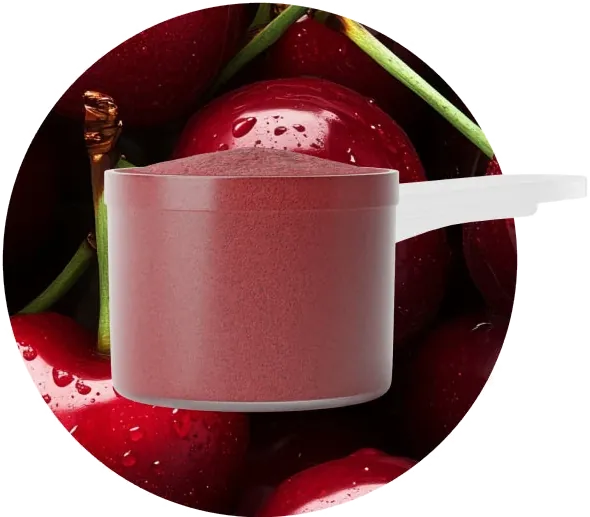
A teaspoon of black-cherry beet powder stirred into half a glass of water and drunk straight away, once a day, from a Texas company.
CHECK AVAILABILITYSold by Human Power of N Company (Humann), Austin, Texas · 30 black-cherry teaspoons in a 5.3-ounce tub, one a day in water · refund within 90 days of purchase with a return number, minus shipping
Questions from the porch
What exactly is it?
A beet root powder with black cherry flavor, sold as a dietary supplement. You stir one teaspoon into water once a day.
How much water do I use?
Four to six ounces of plain water. The label says not to mix it with juice or a smoothie.
When should I drink it?
The seller says any time of day works. Drink it right after mixing.
How much nitrate is in a teaspoon?
The label doesn't print it. You can ask the seller at (855) 636-4040.
Does my mouthwash matter?
In two small studies, strong antibacterial rinses blunted the tongue's nitrate step. [8] [9] Ask your dentist before you change anything.
Does it have sugar?
Three grams of sugars from the beet and none added. A stevia extract sweetens it.
Does it have caffeine?
No caffeine is listed on the panel.
Will it turn anything red?
It can turn urine pink or red, which is said to happen in about 10 to 14 percent of people. [18]
What did the studies in older adults find?
Mixed results. In one review of 12 trials, blood-flow measures improved in six and not in six. [14]
How long is the refund window?
Ninety days from the purchase date, with a return number first, minus shipping.
Should I talk to anyone first?
Your pharmacist, if you take anything daily.
Back on the Porch
I brought my notes to the walk on a Tuesday at the end of September.
We stopped at the bench, and I read them to Walt and Gene while the sun came up behind the water tower.

Here's where the teaspoon landed.
The mouth part is real, and it was the part I'd never heard of: the nitrate goes round through your saliva and your tongue before it goes anywhere else. [5]
The walking part is real in young men, and split down the middle in people our age. [10] [14]
And the number that would connect the two, the nitrate in a teaspoon, isn't on the tub.
Is it worth trying? That's yours to decide, not mine.
If you do, you know the gesture, the price, the refund, the rinse question and the one number to ask the seller for.
Walt listened to the whole thing and then asked the only question that mattered to him.
"So the rinse is the thing I ask the dentist about," he said, and Gene said the dentist would be thrilled to be asked anything at all.
If you decide to try a tub, you now know what the teaspoon holds, what it doesn't print, and what the studies measured.
If you decide not to, the minutes, the greens, the water and the hill will all be there tomorrow morning.
Either way, I hope your mile goes well this week.
And I hope the hill on your own Birch Street feels like one hill.

Sold and shipped by Human Power of N Company (Humann), Austin, Texas. The price and any promotion are set by the seller.
Every line of the panel, with its amount and the studies behind the beet, is written out in the ingredient and advertising guide linked at the foot of this page.
The guide also explains the missing nitrate figure and the one question worth asking your pharmacist.